The Episcopal Way
The Episcopal Church stands in the Anglican tradition — a branch of the church that traces its roots through the Church of England back to the earliest Christians. We believe and follow what Jesus Christ teaches us and believe that God's grace is freely offered to all.
What makes Episcopal worship distinctive is its liturgical character. Each service follows the structured, participatory forms of the Book of Common Prayer, meaning that worshippers pray together using shared words — words that have been refined over nearly five centuries. This "common prayer" is not rote recitation but a joining of voices across time and across the world.
If you are new to Episcopal worship, you may find it more participatory than you expect. There is a lot of standing, sitting, and kneeling; responses spoken or sung together; and a rhythm that becomes familiar quickly. The bulletin guides you through every step — you will never be lost for long.
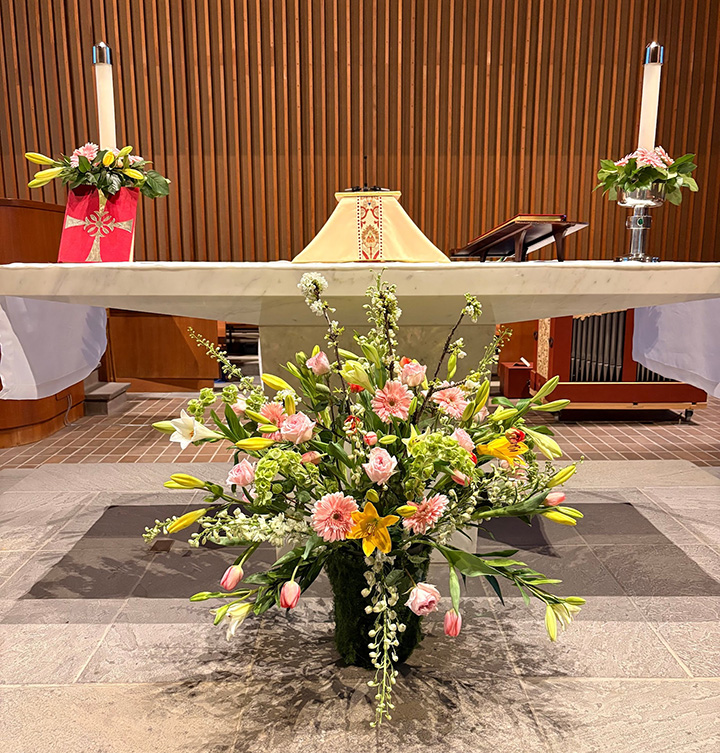
Worship at Trinity is rooted in the rich liturgical tradition of the Episcopal Church.
The Heart of Anglican Worship
The Book of Common Prayer (BCP) is the primary book of worship of the Episcopal Church and the primary symbol of Anglican unity worldwide. First compiled in English by Archbishop Thomas Cranmer in 1549, it gathers in a single volume all the liturgical rites of the church — from daily morning and evening prayer, to the Eucharist, to baptism, marriage, and burial.
The word "common" is the key: this is prayer held in common, shared by the whole congregation regardless of background or experience. You do not need to know anything in advance — everything you need is in the BCP or in the weekly bulletin.
The current Episcopal BCP, adopted in 1979, offers two forms of the Eucharist: Rite I, which uses the traditional, Elizabethan-era language of earlier prayer books ("thee," "thou," "thine"), and Rite II, which uses contemporary English. Trinity uses Rite II for most services, and Rite I at the 8:00 AM service during Advent and Lent.
First Edition
1549, compiled by Archbishop Thomas Cranmer
Current Edition
1979, used throughout The Episcopal Church
Rite I
Traditional language — "thee," "thou," "thine"
Rite II
Contemporary language — used at most Trinity services
What's Inside
Daily offices, the Eucharist, all sacramental rites, psalms, and prayers for every occasion
Unity
The same prayers are prayed in Anglican congregations around the world
Anglican Theology
The Anglican tradition is sometimes called the via media — the "middle way" — because it holds Catholic and Protestant instincts in creative tension. Rather than choosing between Scripture alone or church authority alone, Anglicanism grounds its theology in three mutually reinforcing sources, often described as a three-legged stool: if any one leg is removed, the whole thing falls.
The Holy Bible is the supreme authority for Christian faith and practice. The Old and New Testaments contain all things necessary for salvation. In Episcopal worship, large portions of Scripture are read at every service, following a three-year lectionary cycle that takes congregations through most of the Bible.
The church's accumulated wisdom — the creeds, councils, sacraments, and practices handed down through two millennia — provides essential context for understanding Scripture. We do not read the Bible in isolation, but within the living community of the whole church across time.
God gave human beings minds, and Anglican theology takes rational inquiry seriously. We are not asked to check our intellects at the door. Reason — including scholarship, experience, and honest questioning — helps the church understand and apply Scripture and Tradition in each new age.
The Calendar of the Church
The Episcopal Church follows the liturgical year — a cycle of seasons and feasts that shapes the rhythm of worship and tells the story of salvation from beginning to end. Each season has its own character, prayers, and colors displayed on the altar hangings and the stoles worn by clergy.
The church year begins in quiet anticipation. Advent is a season of holy waiting — preparing hearts for the coming of Christ at Christmas and looking forward to his promised return.
Twelve days of celebration marking the birth of Christ. The season extends through the Feast of the Epiphany on January 6, when the church commemorates the arrival of the Magi.
"Epiphany" means showing forth. This season celebrates the revelation of Christ to the world — beginning with the Magi and continuing through Jesus's ministry, miracles, and growing recognition as the Son of God.
A season of repentance, fasting, and renewal in preparation for Easter. Lent calls us to honest self-examination — not to guilt, but to transformation. It begins on Ash Wednesday, when the cross of ashes recalls our mortality and God's grace.
The most sacred week of the year, moving through the triumphal entry on Palm Sunday, Maundy Thursday's Last Supper, the darkness of Good Friday, and the silent waiting of Holy Saturday before the great Vigil of Easter.
The Great Fifty Days — the most joyful season of the church year. The resurrection of Christ is celebrated not just on Easter Sunday but throughout this entire season. "Alleluia" returns to the liturgy after its Lenten absence.
The feast of the Holy Spirit's descent upon the disciples — the birthday of the church. Red vestments mark the fire of the Spirit. The following Sunday, Trinity Sunday, celebrates the mystery of the Holy Trinity: Father, Son, and Holy Spirit.
The longest season of the year — sometimes called "Ordinary Time" — focuses on the ongoing work of discipleship and mission. "Ordinary" comes from the Latin for "numbered": these are the counted Sundays of growing in faith and life together.
For First-Time Visitors
Episcopal worship can feel unfamiliar the first time. Here is a practical guide to what you will encounter — and an assurance that everyone around you was once a newcomer too.
A weekly bulletin is provided at the door. It contains the order of service, page numbers in the prayer book and hymnal, and the appointed Scripture readings. You will always know where you are.
Episcopalians stand for most of the service — for hymns, the Gospel reading, and the Eucharistic prayer. Kneeling is traditional for confession and personal prayer but is always optional. The bulletin will indicate when to stand or sit.
Much of the service is participatory. Congregational responses are printed in the bulletin and prayer book. You will find yourself joining in prayers, creeds, and acclamations — a distinctive feature of liturgical worship.
Near the middle of the service, the congregation exchanges "the Peace" — a handshake, hug, or nod with those around you, offering the greeting "Peace be with you." It is a moment of genuine community before the Eucharist.
All persons are welcome to receive the bread and wine of Holy Communion. Come forward, receive the bread in your hands. You can then either drink from the cup or if you prefer a blessing instead, cross your arms over your chest.
You may notice some people making the sign of the cross at certain moments — at the beginning of the Gospel, at blessings, or in personal prayer. This ancient practice is optional in the Episcopal Church. Do what feels natural to you.
Common Terms
Episcopal worship has its own vocabulary. Here are some of the words you are most likely to encounter. A more complete glossary can be found on the Episcopal Church's website.